
Introduction
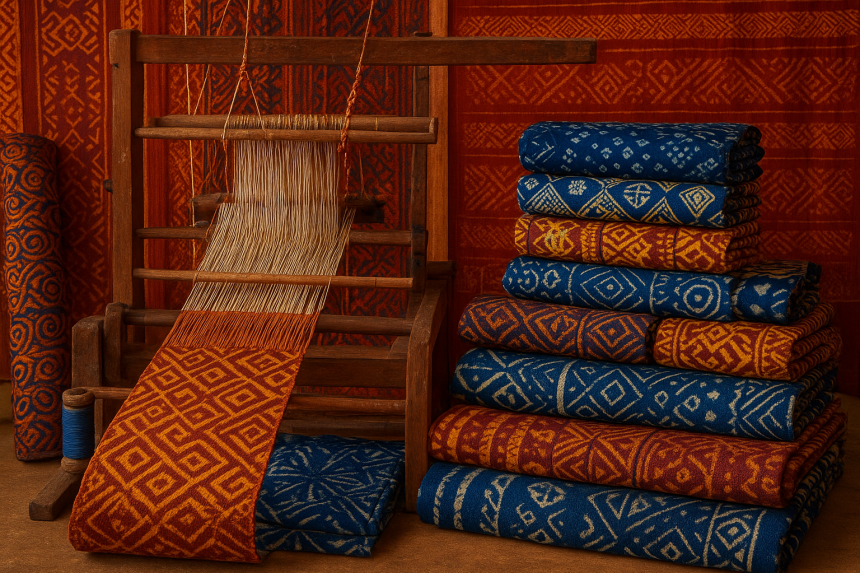
Every society carries its stories in fabric. Some write them in ink on paper, others inscribe them in bronze or stone, but in Southwestern Nigeria, stories often flow through thread. To run a hand across handwoven Aso-Oke or to see the vibrant patterns of Adire cloth drying under the Ibadan sun is to encounter a living archive — a testimony woven not only with cotton but with memory.
Textile weaving in Southwestern Nigeria is not simply the act of producing clothing; it is a deeply cultural performance that embodies history, identity, and creativity. From the looms of Oyo and Osogbo to the indigo pots of Abeokuta, weaving has remained both an economic livelihood and a cultural language. This essay explores the origins of Yoruba weaving traditions, their ritual and social functions, the challenges they face in the modern era, and the ways in which they continue to inspire new generations.
Origins of Yoruba Weaving Traditions
Weaving in Yorubaland stretches back centuries, rooted in both necessity and aesthetics. Cotton was cultivated and spun locally, and artisans developed intricate techniques for dyeing and weaving. Among the Yoruba, the most renowned woven fabric is Aso-Oke, which literally means “cloth from the top,” a name suggesting both prestige and elevation.
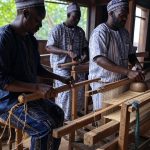
Weaving was traditionally gendered: men operated the narrow horizontal looms that produced long strips later sewn together, while women often engaged in dyeing and spinning. The loom itself was considered sacred, its rhythmic movements echoing cycles of life, labor, and renewal.
The introduction of indigo dyeing and resist techniques gave birth to Adire, the patterned cloth now globally recognized. Abeokuta women, in particular, became custodians of this tradition, innovating with cassava paste resists, tying, folding, and stitching methods to create distinctive motifs.
Thus, Yoruba weaving and dyeing practices were not only technical innovations but cultural inventions that shaped community aesthetics.
Weaving as Cultural and Social Language
To wear woven fabric in Yoruba society is to speak. Patterns, colors, and textures convey social meaning, encode lineage, and express status.
- Rites of Passage
Special woven fabrics accompany life’s milestones. Weddings, funerals, naming ceremonies, and chieftaincy titles all require specific forms of Aso-Oke. For example, Alaari (crimson-dyed cloth) is often associated with prestige and used in bridal attire, while Sanyan (woven with beige silk and cotton blend) is regarded as dignified wear for chiefs and elders. - Symbol of Unity
The tradition of Aso-ebi, where groups wear matching fabrics during ceremonies, underscores Yoruba communal values. The fabric becomes a badge of solidarity, weaving people together not just in appearance but in shared identity. - Spiritual and Ritual Use
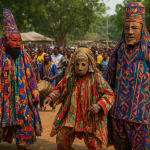
Certain woven cloths are reserved for ritual contexts. Priests, masquerades, and traditional rulers don fabrics imbued with spiritual significance, often believed to confer protection or channel ancestral presence. - Economic Exchange
Textiles were also historically significant in trade. Aso-Oke was exchanged across regions, linking Yoruba communities to wider West African and even trans-Saharan trade networks.
Thus, woven cloth operates as text — to be read, understood, and interpreted in cultural and social contexts.
The Aesthetics of Memory
Every pattern tells a story. The stripes of Aso-Oke are not random but often tied to meanings. Some evoke rivers, others symbolize fertility or resilience. In Adire, motifs such as Olokun (the goddess of the sea) or Ibadadun (“Ibadan is sweet”) inscribe historical consciousness and communal pride.
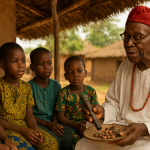
The weaving process itself is an act of memory. Techniques are passed down through generations, with mothers teaching daughters, fathers guiding sons. Each new cloth thus becomes a continuation of lineage — a thread in a long line of collective memory.
Challenges in the Modern Era
Despite its richness, traditional weaving faces serious challenges in contemporary Nigeria.
- Industrial Competition: Imported machine-made textiles flood markets at lower costs, undercutting local weavers.
- Loss of Apprenticeship: Younger generations, attracted to urban jobs, often show little interest in learning labor-intensive weaving.
- Diminishing Raw Materials: Cotton production has declined, making it harder and costlier for artisans to sustain their craft.
- Cultural Dilution: With the globalization of fashion, many prefer Western-style clothing, relegating traditional cloth to ceremonial use.
These pressures threaten the survival of weaving traditions unless new strategies for revitalization are embraced.
Revival and Innovation
Yet, weaving in Southwestern Nigeria is far from a dying art. In fact, a revival is underway, driven by artists, entrepreneurs, and cultural enthusiasts.
- Contemporary Fashion Designers
Designers like Deola Sagoe, Lanre Da Silva Ajayi, and Maki Oh have incorporated Aso-Oke and Adire into haute couture, bringing Yoruba weaving to international runways. - Cultural Festivals and Tourism
Events such as the Osun-Osogbo Festival showcase woven textiles, creating renewed appreciation and market demand. - Artistic Experimentation
Contemporary visual artists are experimenting with textiles as media, embedding Aso-Oke and Adire in installations that bridge craft and fine art. - Global Diaspora Influence
Nigerian diaspora communities in London, New York, and beyond proudly wear Aso-ebi, extending Yoruba textile culture into global spaces.
Through these channels, weaving continues to evolve, proving that traditions can adapt without losing their essence.
Weaving as Metaphor for Nigerian Resilience
Weaving is more than cloth production; it is metaphor. To weave is to bring together separate threads into unity. This resonates deeply with Nigeria’s social reality — a nation of diverse ethnicities, religions, and identities.
Just as a strip of Aso-Oke requires careful alignment of threads, Nigeria itself requires delicate weaving of its many peoples into one fabric. The resilience of Yoruba weaving traditions, surviving colonialism, globalization, and industrial competition, mirrors the resilience of the Nigerian spirit.
Conclusion
The threads of Yoruba weaving are threads of memory. They connect generations, link rituals, express identities, and embody resilience. To see an Aso-Oke wrapper or an Adire gown is to encounter more than fabric; it is to meet the voices of ancestors, the labor of artisans, and the creativity of a living culture.
In a world that often forgets its roots, Yoruba textiles remind us that memory can be worn, that culture can be carried on the body, and that identity can be woven into the very cloth we live in. The challenge for the future is to ensure that these threads are not broken but extended — weaving old memories into new possibilities.