
Introduction
Architecture is never neutral. Beyond shelter, it is a language of power, memory, and spirituality. In Yorubaland, shrines and palaces are not merely buildings; they are embodiments of cosmic order, political legitimacy, and ancestral presence. A palace (afin) is the physical manifestation of kingship, while a shrine (ilé-orò or ilé-orìṣà) is the earthly seat of divine forces. To step into these spaces is to cross into symbolic geographies where walls speak, courtyards perform, and carved doors guard centuries of memory.
This essay explores the architecture of shrines and palaces in Yoruba society, highlighting their design principles, symbolic meanings, and enduring significance in a rapidly modernizing world.
Palaces as Architecture of Kingship
The palace in Yorubaland is not just a royal residence. It is a political theater where governance, spirituality, and tradition converge. Each palace—from the Alaafin’s vast afin in Oyo to the Ooni’s compound in Ife—is a microcosm of Yoruba society.
- Spatial Hierarchy
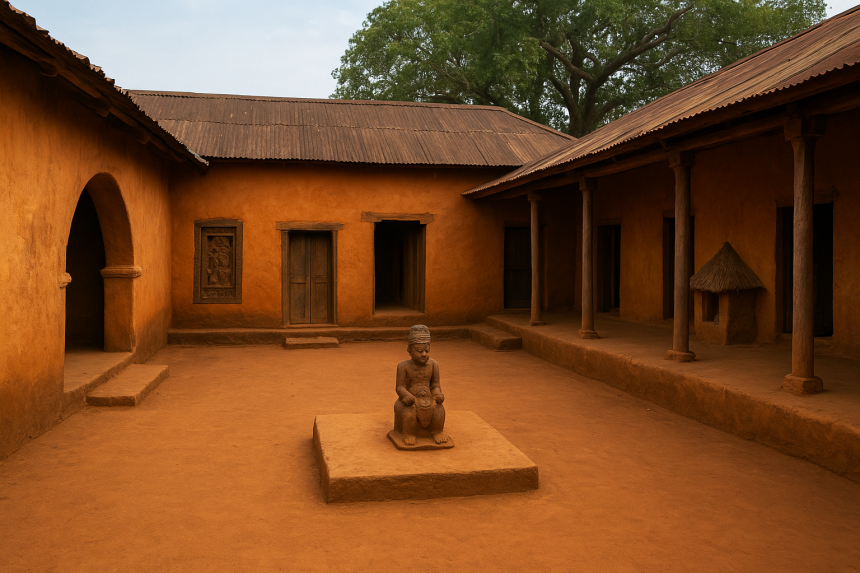
The palace is usually divided into multiple courtyards, each with specific functions:- The outer courtyard for receiving visitors, hearing cases, and showcasing authority.
- The inner courtyards for the royal family and rituals.
- Sacred rooms for ancestral objects, regalia, and shrines.
- Materials and Design
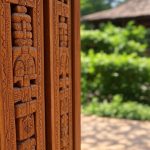
Traditionally, palaces were built of mud walls and thatched roofs, adorned with carved wooden pillars and decorative verandas. These were not just aesthetic but symbolic, with carvings depicting mythic narratives, animals, or legendary kings. - The Palace as Social Organism
Beyond architecture, the palace is a city within a city. It accommodates chiefs, retainers, drummers, diviners, and servants. The palace is thus a living institution, its architecture designed to sustain complex social life.
Shrines: The Architecture of the Sacred
If the palace represents human power, shrines embody the divine. Shrines are houses of the òrìṣà (deities) or spirits. Each deity has its spatial requirements, architectural forms, and symbolic decorations.
- Form and Structure
Shrines are often modest in scale but heavy in symbolism. A shrine to Ogun may include iron tools embedded in its walls; a shrine to Osun may incorporate water basins and painted motifs of fertility. Some shrines are enclosed huts, others open-air spaces within sacred groves. - Material Symbolism
- Mud and clay: symbolizing earth, stability, and the maternal principle.
- Palm fronds and raffia: marking boundaries between sacred and profane.
- Iron, stones, or carved figures: embodying the deity’s essence.
- Sacred Groves as Architecture
Architecture in Yoruba shrines extends beyond built structures into landscapes. Sacred groves, such as the Osun-Osogbo Grove, function as open-air temples where paths, trees, and sculptures together form a spatial liturgy. These are recognized globally as UNESCO heritage sites, proof of their architectural and cultural weight.
Symbolism in Walls, Doors, and Courtyards
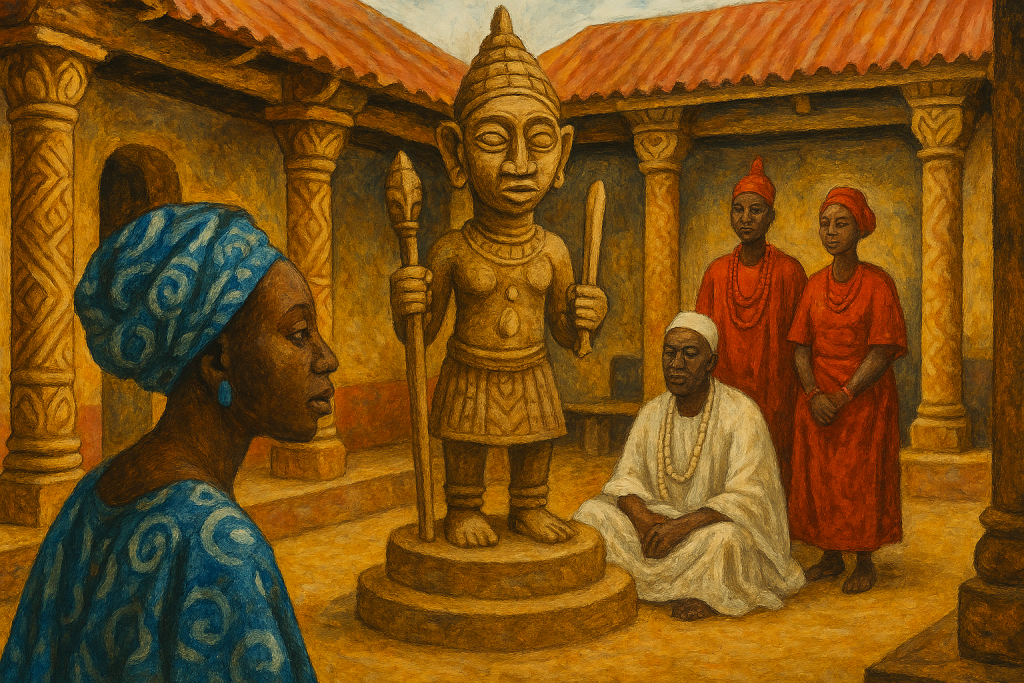
Yoruba sacred and royal architecture often features elaborate carvings and spatial symbolism.
- Carved Doors: Wooden palace doors, like those made by Olowe of Ise, are both artistic masterpieces and historical documents. They depict warriors, drummers, colonial officers, and deities, encoding oral history in wood.
- Courtyards: Central courtyards are not empty; they are ritual stages where festivals, performances, and judicial proceedings occur.
- Thresholds: To cross a palace gate or shrine entrance is to undergo transformation. Spaces are charged, thresholds marking the boundary between ordinary life and sacred or political presence.
Case Study 1: The Palace of the Alaafin of Oyo
The Alaafin’s palace is one of the largest traditional palaces in Africa. Its layout with more than 100 courtyards reflects Oyo’s imperial past. Each courtyard has a name, function, and ritual significance—some for drumming, others for judicial cases, others for ancestral worship.
The Alaafin’s palace is also layered with symbolism: the Akesan market nearby signifies the bond between king and economy, while sacred trees within the palace link to the spiritual world.
Case Study 2: Osun-Osogbo Sacred Grove
Unlike palaces, shrines are often situated in forests or groves. The Osun Grove near Osogbo is the most famous, with shrines, sculptures, and altars dedicated to Osun, the goddess of the river. Its architecture is fluid, merging natural and human-made forms. Paths lead pilgrims through symbolic landscapes, culminating in shrines where rituals are performed.
Here, architecture is ecological—it lives in conversation with rivers, trees, and animals.
Architecture of Resistance and Survival
Colonialism disrupted Yoruba architecture. Palaces were sometimes burned or diminished in power as British administrators imposed indirect rule. Shrines were demonized as “pagan” and destroyed by missionaries. Yet, both institutions survived.
- Palaces incorporated cement and zinc roofing while maintaining courtyards and symbolic carvings.
- Shrines adapted to Christian and Islamic Nigeria by becoming more discreet, but many revived through cultural festivals.
Today, both shrines and palaces stand as symbols of cultural resilience.
Contemporary Relevance
Modern Yoruba architecture continues to reference these sacred forms. Architects and cultural custodians are rediscovering traditional spatial designs, blending them with contemporary needs. Palaces host not only rituals but also cultural tourism; shrines attract both devotees and heritage scholars.
The recognition of Osun-Osogbo Grove as a UNESCO World Heritage Site is proof that Yoruba sacred architecture is globally significant, not relics but living traditions.
Conclusion
Yoruba shrines and palaces remind us that architecture is never only about bricks and mortar. It is about memory, ritual, and power. Walls are not passive—they speak of authority and ancestry. Courtyards are not empty—they are theaters of politics and worship. Shrines are not huts—they are nodes in a cosmic network linking earth, deities, and humans.
In an era where glass towers dominate skylines, the mud walls of Yoruba palaces and shrines still whisper wisdom: that architecture must serve both body and spirit, both people and gods, both the living and the ancestors.